Tuesday, October 15, 2013

Conventional business costs more than green business, we just haven't grasped that yet

If you attend conferences and meetings among people in "green" industry, one theme dominates all:
Why won't decision makers pay more to do the right thing?
The common business wisdom says that - within the confines of the law - a manager owes it to their stakeholders to maximize profit.  Markets (both free and mildly regulated like ours) favor incumbents and have a natural inertia to new ideas.  Given these obstacles, I think the better question is:
Why don't "green" strategies and technologies cost less?
Green businesses waste less than "conventional" ones, impose less damage on society, and have positive influences on the health and well-being of workers.  Each of these should make following green practices an innovative, more cost effective approach.  After thirteen years advocating for better business and organizational practices, I still hear the mantra about paying more.  At the Illinois Green Business Association Summit today, I heard some heartening news on the business front...news that those of us seeking market solutions should find hopeful, or at the least, good conversation starters.

  • First, companies in the Carbon Disclosure Project have a +1.6% greater rate of growth (not 1.6% higher growth, but a growth rate that is 1.6 percentage points higher) and 18% greater cash flow stability.  
  • Second, in 2007, Golman Sachs reported that companies that include sustainability in their profit focus have a 25% greater stock value than those that do not.  
  • Lastly, Jeremy Grantham - Chief Investment Strategist at GMO - stated in an interview with Charlie Rose that under a business-as-usual approach to environmental valuation, we will see growth of 0-1% per year instead of our assumed 3-8% per year.

These suggest that we can maintain profit margins, even while pursuing better practices, and that as the conventional economy becomes weighed down by its energy intensity, more sustainable, nimble business will thrive.  A consensus is growing that effective business management holds the key to rapid changes in our economy to align human-centered management with profit-centered management; after all, our economy is at its core about managing resources to improve quality of life.  Some core ideas that must take root are:

1.  The market must account for all costs of doing business against the bottom line of the businesses that create those costs.  The theoretical "rational consumer" that forms the foundation of modern economics must have all the information about a product when they choose, and without that, we create market distortions that incentivize the wrong behaviors.  This necessary accounting can come from the market (i.e. through insurance) or through government regulation (e.g. carbon tax), but as long as it is accurate and targeted, it will ensure that the truly economical option prevails.

2.  "Green" businesses must innovate faster than conventional ones.  With entrenched market position and capital, conventional industries hold a significant advantage, but with that entrenchment comes a resistance to change.  Technologies that develop quickly and provide game changing performance can get to market faster than ever before, as long as that process is managed properly.

3.  Moving from a service economy to an information economy will restore the community connectedness and social capital necessary to make our cities more resilient.  We will continue to become more or an urban-dwelling species, so our cities must respond with more resilient infrastructure - both physical and social.  Energy-intensive processes will give way to more efficient ones, especially as demand for resources and population growth continue to grow geometrically.  As we leverage improved communications to increase the flow of information, we will create a new business paradigm for getting products to markets...one that relies on the community to use information to create product and service instead of importing the product or service.

4.  The concept of government subsidy has to become more nimble, and focused on removing market obstacles as opposed to overcoming them simply with capital.  As our problems grow, and our government resources wane, we need mechanisms that not only provide capital to overcome market inertia, but smart approaches to organizing the economy in such a way as to reduce the need for capital to innovate.  For example, instead of providing loans or subsidy to new enterprises for the purpose of providing management capacity, provide loans or grants to business incubators that can help multiple companies at once.

A prudent combination of market leveling and culture change in "green" business will restore the sense of industry and community that made our nation strong last century.  The economics make sense, the motivation is there, all we need is a collective determination to improve quality of life for all, and we can cause rapid, significant, and beneficial change.

Monday, October 14, 2013

When did economics become more important than science?

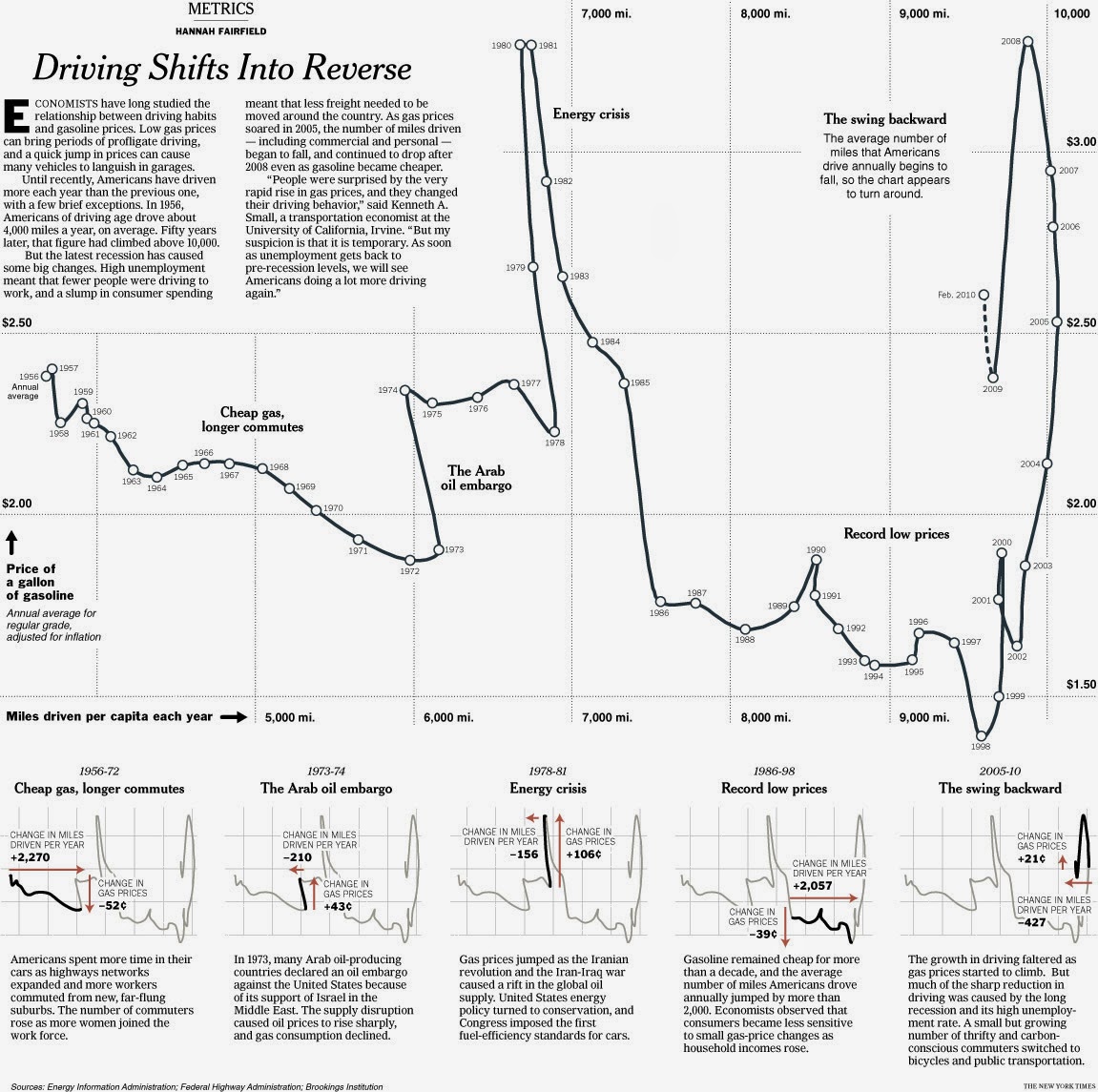
Energy companies take advantage of middle class"Over the past 30 years, income in the typical American household has stagnated.  In that same time period, the average household in America has seen its home energy costs nearly triple from $800 per year to $2,025 per year.  To make matters worse, in 1978, an average household would spend $225 a year on fuel for transportation but by 2008, it increase to almost $3,000.  With no increase in real wages, this increase has eaten over $2,000 out of the annual buying power of a middle-class household."

Were anyone to write this as a column, I would expect to see a significant backlash from people knowledgeable about finance and energy.  They would not only point out that the costs have not been adjusted for inflation, but that automobile use has increased significantly.  This lack of understanding would deservedly earn the author disrespect and ridicule.

Yet, over the past couple of months, the press has written several articles covering the release of the latest IPCC report focusing on a "pause" in global warming.  This selective reading of recent weather patterns has distorted the overall understanding of the report, which increased the certainty that climate change is human-caused and will produce significant damage to our quality of life if left unchecked.  If someone writes about air temperature increases, but does not account for the ocean temperature increases or ice melt that occurred coincidently, they should receive the same public scolding as someone who writes about cost increases, but does not account for inflation.  Selectively choosing a weather timeframe that starts with an anomaly year, then claiming that horizon accounts for climate should have as little respect as picking a time horizon that makes an economic argument look stronger.  This is especially true given that fifteen year time horizons do not provide any information about changes in climate, which looks at trends over a longer term.

The release of the latest IPCC had major communication issues, and the editors' decision to amend the report to address concerns about "the pause" made matters worse.  That said, the report - without any qualification - shows that temperatures have increased and continue to do so.  It shows that we continue to collect and trap heat at rates not previously seen in human existence.  The report also reaffirms that these increases in heat collection and storage do not have a natural cause, but a human-caused one.

Science welcomes vigorous discussion and challenges to commonly held beliefs, but selectively choosing data to suit a political agenda should have the same recourse in scientific discussions that it does in economic.  The fact that is has not, to date, shows an increasing disrespect for the area of our lives on which all others are built.  That has to change if we are to survive.

Friday, October 11, 2013

Friday Five: October 11, 2013

There is an absolute difference between speech as opinion and speech as fact. I, personally, applaud a newspaper - an industry that should be based on the pursuit of truth and fact - holding ground that it will publish differing opinions, but it will not print falsehoods disguised as opinions. After a forty-year-long attack on government, we have recently seen an attack on science, and if we lose both of those battles, we will have lost our foundation.
L.A. Times won't publish climate denier letters
"I do my best to keep errors of fact off the letters page; when one does run, a correction is published. Saying 'there’s no sign humans have caused climate change' is not stating an opinion, it’s asserting a factual inaccuracy."

This becomes essential as we enter an important transition for our species: from energy-intesive growth, to smart-energy sustainability. If we allow volume and access to outweigh tested methods for knowledge attainment, then we set ourselves up to unravel hundreds of years of intellectual development. I find it interesting that in the pursuit of economic gain, a sector of our population pushes conservatism when it comes to assessing the value of infrastructure, but liberalism when it comes to the value of science.
The climate risks of an overreliance on natural gas for electricity
"Natural gas does have a role to play in the U.S. power supply, but an overreliance on natural gas over the long-term will not achieve the emissions reductions needed to address global warming. Instead the U.S. must invest in achieving a low-carbon electricity future by generating more electricity from renewable energy sources and improving energy efficiency."

The continued lunacy of closing the federal government highlights the short-sightedness that accompanies rash thinking. We still want safe meat, military preparedness, seniors having access to capital to spend, and even oversight of industries whose past accidents have caused significant physical, economic, and environmental damage. If we experienced another Deepwater Horizons-like spill in the Gulf, or a Fukishima-like nuclear disaster, and those tasked with oversight and response had not been on duty, we would immediately clamor for their return. It should not come to that.
Shutdown is affecting energy and environmental programs
"The Nuclear Regulatory Commission announced that barring a compromise in Congress, the agency would be mostly closing up on Thursday, with all but about 300 of its 3,900 employees scheduled to be furloughed. Those who remain include about 150 inspectors who live near nuclear power reactors. Most of the rest are at the agency’s headquarters in Rockville, Md."

Over the next year, we will hear regular reports about the new scientific consensus in the latest IPCC report on climate change. Much of it will contain ranges of changes and levels of confidence in those changes. As with all science that predicts events, we cannot be sure what will happen until we get there, and we can always avoid the predictions through the way we change our actions.
By 2047, coldest years may be hotter than the warmest in the past, scientists say
"The research comes with caveats. It is based on climate models, huge computer programs that attempt to reproduce the physics of the climate system and forecast the future response to greenhouse gases. Though they are the best tools available, these models contain acknowledged problems, and no one is sure how accurate they will prove to be at peering many decades ahead."

However, sometimes it does not take long papers or predictive science for us to understand that we are facing rapid change and that we must mitigate, adapt, and respond.
Yosemite's largest ice mass is melting fast
"Lyell has dropped 62% of its mass and lost 120 vertical feet of ice over the last 100 years. 'We give it 20 years or so of existence — then it'll vanish, leaving behind rocky debris,' Stock said.
The Sierra Nevada Mountains have roughly 100 remaining glaciers, two of them in Yosemite. The shrinkage of glaciers across the Sierra is also occurring around the world. Great ice sheets are dwindling, prompting concerns about what happens next to surrounding ecological systems after perennial rivulets of melted ice disappear."

Happy Friday!

Thursday, October 10, 2013

The energy for economic development (Part 3: Developments)


Investigating, understanding, and harnessing energy has allowed our species to extend life and create a greater capacity for new life in ways previously unthinkable.  From the beginning of recorded time until  1850, our population on the planet grew steadily to about one billion.  After developing efficient ways to harvest and deploy intense stores of energy, we grew by another billion in the next hundred years - a growth rate 100 times faster than the previous centuries.  In the next twenty years - 1950 to 1970, we grew by another billion, and have added about a billion every twenty years since.  Meanwhile, life expectancy across the globe has increased, leisure time has increased, and overall quality of life has increased.  None of this is possible without our ability to manipulate energy the way we have.

That said, the systems we have developed threaten to tear us apart, and we now know that the cycle we created: improved energy knowledge leading to efficient energy transfer systems leading to population growth leading to the need for more energy leading to more efficient energy transfer systems leading to population growth...that cycle must be interrupted, and in such a way as to not damage the quality of life for this or another future generation.  The market for energy has finally started to respond to the stresses we have placed on it, and many great opportunities now exist to continue to develop our economies, improve quality of life, and establish a more stable and resilient future for our descendants.

Much has been made about the advances in utility-scale electricity generation (improved wind, concentrated solar, and hydroelectric).  Those technologies all have shown economic parity with conventional fuels, but their development does little to impact the development and maintenance of our communities.  The real opportunity comes in new opportunities at community and building scale.  These offer not only a hope for improving our impact on the environment, but also show us a path to make this improvement while incentivizing development in our communities.  Some ways we can do this include:

1.  Building efficiency.  One of the least discussed, yet most relevant, programs within ARRA (better known as "the stimulus") provided funding to communities to improve insulation in homes and businesses.  We have the knowledge and the skill to make every building so resistant to heat loss or gain (the drivers in winter and summer respectively for our need to add heating or provide cooling to our buildings), but lack only the prioritization.  Most communities have contractors and service providers skilled in the construction and maintenance of buildings, and those that do not can quickly develop the labor force through an existing network of robust community college and union training programs.

2.  Geo-exchange thermal storage.  Sometimes generically referred to as "geothermal" (and not to be confused with "hot springs"-type underground heat that can drive electricity generators), the process of removing heat from buildings in summer, then storing the heat in the natural capacity of the earth for use in winter has a long history and simple operation.  These systems have gained widespread use in the climate belt where we experience both cold winter and warm summer to varying degrees.  Since this climate zone uses the largest energy per capita, geo-exchange offers a great opportunity to significantly reduce energy need.

3.  Solar thermal and photovoltaic.  Five years ago, discussing solar as an option rolled eyes, and for good reason: it did not pay.  Half a decade later, prices have fallen, installation methods improved, and obstacles have started to melt.  A large portion of the country already has cost-effective solar installations, and that area grows monthly.  The key development for our communities will come in deploying that solar not on large farms away from the city, but in our undeveloped lots, on our open rooftops, and within our building structures.

The way to capitalize on these strategies and technologies in a way that promotes community development revolves around legal tools called performance contracts and power purchase agreement.  In these legal arrangements, an entity (more on who later) pledges capital to a project, a contractor and designer implement the project to save a guaranteed amount of energy (performance contract) or produce a guaranteed amount of energy (power purchase), and building owners agree to pay utility bills equivalent to their current conventional usage until the investor has recouped their capital.  The manner that this can help community economies is this:

  • The investor is a community bank, using investment tools that maximize capital pledged by members of the community.
  • The contractors and designers come all, or mostly, from businesses within the community.
  • The community building owners receive the maximum benefit when the contract ends and their energy bills drop dramatically.
As we saw in the previous posts, a typical community can have around $40 million a year they pay for energy.  Capitalizing that over five to fifteen years gives us between $200 and $600 million that can be invested to make the improvements noted above.  Done piecemeal, this can deliver slow and sporadic savings, but done aggressively, it can provide an opportunity for rapid and sustainable improvement in quality of life.

In order to accomplish this, we will need the help of government and industry.  Investors will only risk capital if they know that the payments will continue, even if the present homeowner sells.  We can accomplish this through several means: property assessed clean energy (PACE) and on-bill financing.  PACE allows homeowners to pay for improvements through an additional assessment on the property taxes, and when they transfer the property, the next owner continues the assessment until the payments are complete.  In on-bill financing, the same happens except through the utility account associated with the meter at the property.  Either way, we mitigate some of the risk associated with the transaction.  Currently, only utilities and municipalities (or similar units of local government) have the size to adequately handle the mitigation.

With an additional $40 million per year in potential, we can create much economic growth in our communities.  If we can extend this to our transportation energy as well, we can affect another $70 million.  Energy has given us an enhanced quality of life, and it can do it again...except this time, only if we are smarter with it.


Part 1:  Economy...We have found it more efficient to use cheap energy to deliver our quality of life.
Part 2:  Energy...Our relationship with energy drives a loss of stability, and can just as easily restore it.

Tuesday, October 8, 2013

The energy for economic development (Part 2: Energy)


I will often ask people to define "energy", and after a couple of minutes of awkward silence, someone will recall high school physics and answer, "Work."  I usually follow this correct response by asking everyone in the audience to think back on their day and identify some non-work thing they did that required energy.  After a bit of thinking, we all come to agreement that everything we do involves energy in some form or another, and I offer a more accurate, one-word definition of energy:

"Life."

Everything we do involves energy in one of its various forms.  We burn chemical energy to heat water for our morning shower.  We tap the potential in an alternating circuit to power our radio or television as we listen to or watch our morning news.  We consume food grown through a process that uses intense, solar radiant energy to combine carbon dioxide, water, and other nutrients into the sugars, fats, and proteins we need to survive.  The way that we manage these energy resources makes them reliant on finite and increasingly scarce resources.  Because of this, they carry an economic impact; one that threatens to undermine the foundation of our lives.

Two components of our energy reliance drive this instability:  quantity of usage and cost of resource.  These concepts have some measure of independence, but extremes of either will have an effect on the other.  When prices for energy sit relatively low, usage normally increases, and vice versa.  Also, when have significant stores of available energy, prices stay low, and conversely, as supplies drop considerably, prices increase.  One factor not often considered in this equation, at least from a planning perspective, is the increase in population.  As populations increase, without a corresponding decrease in per-person consumption, energy usage increases; if per-person consumption also increases at the same time, we have geometric increases in energy usage that have significant effects on the price and availability of resources.

To see how this plays out for a typical community, consider a neighborhood of about 20,000 households and between 40,000 and 50,000 people.  According to the Energy Information Administration, in 1980, the average household spent about $800 per month on energy to support their quality of life, and used about 130 million Btu of energy (with electricity making up about 30 million of that total).  By 2009, the average usage dropped to 90 million Btu (with electricity now making up about 40 million of the total), at a cost of $2,025 per household.  Even though the usage dropped by almost 30%, the cost per household barely changed (when adjusted for inflation).  What's more interesting is that most of the increase in the unit cost of energy happened in the period from 2000-2009, since much of the 1980s and 1990s saw relatively little increase in price.  From 1980 to 2000, the price of electricity dropped (in inflation-adjusted dollars) by nearly 25%.  Between 2000 and 2013, the price increased by 25%.  For our 20,000 households, the community spends approximately $40,500,000 each year on energy for the home.  Add to that the $3,500 a year spent on gasoline (for the 25,000 miles a year that a two-car family will drive), and that brings the energy total per household up to around $110,000,000.*  Even though our per-household usage had decreased by 30% over thirty years, our population has increased by nearly 40% during that timeframe, wiping out the gains.

Even more, of that $110,000,000, virtually none of it remains in the community.  The average household spends 10% of its working time just earning enough to pay for the energy bills.  This does not include the food energy or material energy...just the energy for heat, light, transportation, entertainment, and productivity.  Based on the trends of the last decade, that price could increase from a combined $5,525 to nearly $7,500 or $10,000 per year over the next decade.  Prices in a free market follow supply-demand curves.  If supplies drop, but demand remains constant, prices must climb to offset.  Our current, fossil-fuel based economy has followed the trend below for reserves of fossil fuels.


Over the past thirty years, the available reserves per person in the world has continued a downward trend (albeit with minor blips).  For the better part of the first 75 years of last century, we found new reserves at a faster rate than we used the resources, so the future looked bright and prices stayed low.  Since that time, we have found new reserves at a rate far less than consumption, and over the last half decade, we have found no net new reserves.  Even with the explosion in hydraulic fracturing for oil and natural gas, we have not changed this picture.  Significant increases in world population, and in the number of people in developing countries whose economies need energy to grow, will continue to strain resources and elevate prices.


If we do not get control of our energy use, and develop new ways to harness it that build strength in our communities, we will gradually create a drag on our economies from which it will be difficult to emerge.  (This does not even take into account the interrelationship among food, energy, and water whereby each compete with the other for their mutual resources, or the mounting costs from the environmental damage of fossil fuel use.)  On the other hand, in a functioning market economy, the increasing cost should drive innovation that can turn the challenge into an opportunity.

We have that opportunity now: to redevelop our communities and our main streets from a consumptive-based economic model to a support-based model that builds resilience and strengthens our communities for decades to come.

*Note: This does not include the growing reliance we have on off-site electrical usage for services like cloud computing, streaming video, and internet usage.  Although dependent entirely on personal/household consumption, energy reports do not assign this value to the household, but rather to the industry.

Part 1:  Economy...We have found it more efficient to use cheap energy to deliver our quality of life.
Part 3:  Developments...The key to this restoration lies in creative redevelopment of our main streets.

Monday, October 7, 2013

The energy for economic development (Part 1: Economy)

This three-part series looks at how we have redefined economic development in our communities based upon decades of "cheap energy", and how we must re-examine our relationship with energy if we want to save our neighborhoods and build them to last for the coming generations.


Most people in this country live in large cities, each a combination of communities with varying degrees of connectedness both to each other and within the neighborhood itself.  I grew up in a neighborhood comprised mostly of single-family homes, where the stores sat on specific retail strips that defined the borders of most of the sub-communities within the larger one.  Most of us could walk to the grocery store, drug store, church, or the train station to get to work.  This proximity to services provided opportunity for someone to live without a car, without air conditioning, and except for the "lucky few" with only one television set.  

The idea of "economic development" in those days centered around making sure that the community had the business infrastructure to supply the goods and services that the community members needed to survive at a minimum of cost.  Owning a car was a luxury, and even with cheap gas, most would prefer the convenience of a local store where they knew the owners, perhaps had store credit to help manage their bills, and established relationships with the butchers to know the best day to buy a certain type of meat.  In this economy, the community members split between those who worked in the community providing goods and services and those who would leave the community to bring in new resources.  The balance provided a stable, and relatively resilient structure that survived for several decades, even as other communities suffered population losses and resource reductions from the booming of suburbs.

This urban structure worked well when manufacturing provided jobs in several centers, the downtown business infrastructure supported commuters living near, but not necessarily in, the city center, and the city government provided several services that required not only skilled labor, but additionally required that labor to live within the city limits.  As the US manufacturing sector shrunk, it took with it a pool of resources on which cities had relied to fund the services they provided.  With those resources shrunk, cities began to privatize services to achieve greater economic efficiency.  At the same time, the cities had lost much of the earning class to the suburbs.  This triple shock to urban communities - loss of private jobs, shift of good-paying city jobs, and flight of high earners to suburban communities - devastated a large portion of Chicago and other major metropolitan areas.  As an aftershock of this transition, communities that survived took on a different economic feel in order to compete with their suburban counterparts, one that has undermined the resiliency that the original economic development delivered.

The modern community economic development model uses consumptive retail to lure capital from people who do not live in the community, allows a portion of that capital to leave the community through corporate profits, and keeps a smaller portion for the provision of community services.  Community members still need to leave the community to find work, and now at a larger rate than under the previous model.  This "shopping mall/strip mall" development model requires a level of consumption both within and without the community that we cannot maintain with the standard one-income-earner model of domestic life.  It also depends heavily on the community's ability to respond to the cyclic desires of the "consumption class".  One can see this in my neighborhood: where we once had five significant grocery stores in our portion of the community, we now have only two.  One has grown to provide capacity, while another has changed ownership four times in the last twenty years.  Within three miles of our borders, five different "supermarkets" have sprouted to lure consumers with low prices and national brands.  Most of the food needs of our community now get satisfied through resources outside the community.  Meanwhile, one of the lost stores became a medical office, one became a pre-school/daycare facility, and the third was demolished to make way for condominium development near the commuter rail station.  These three industries have grown because of the sharp increase in the need for consumerism to drive our global and local economy.

This shift has been fueled - quite literally - by cheap energy and low-cost manufacturing.  When my parents bought a second car in 1982 because, for the first time, both of their jobs required them to drive, it was a huge deal.  Now, it shocks no one to hear of a family with teenagers having three or four cars.  Where stopping by the local store on the way home provided the supplies for tomorrow's meals, we now drive an extra ten minutes to save five to ten dollars on a week's grocery bill.  Manufacturing allows us to pay the same price for a car today (in inflation-adjusted dollars) as we did forty years ago, while financing gives us greater access to the purchasing of vehicles than it did in the past.  The freedom of travel also made it unnecessary for communities to provide the retail needed to support their population near where the community members live.  A subdivision explosion placed people in residential settings far enough from retail that they could not survive without at least one car.  "Park and ride/Kiss and ride" stations grew near commuter rail to maintain some connection to the city center, and the number of parking stalls at retail centers grew and grew to enable this new dependence to the tune of approximately 1 billion parking spaces across the country for the 240 million passenger vehicles we own and operate.  That equals one vehicle for each citizen over the age of 15, and slightly more than three parking spaces for each citizen of the US.  


At the same time, cheap energy fueled a change in the way we approach entertainment and community connection.  In 1950, the average resident of the US spent 4 hours a day volunteering or engaged in social interaction.  Nowadays, that has dropped to less than half a day, replaced by television and in-home entertainment.  The family with multiple televisions, laptops, phones, as well as video game systems stands as the norm.  This commitment to spending more time in the home, coupled with reduced costs of technology, have driven up the usage of air conditioning in our homes have combined to increase electricity use in the country by a factor of 12 since 1950 (while our population has only doubled in that same timeframe).  Even though we have reduced heating energy use by nearly half over that same time period, the average household energy use continues to climb when it should be dropping.  Meanwhile, the services we purchase related to this new lifestyle: energy, cable TV/satellite dish subscriptions, hardware and software, entertainment, all of them come from providers outside of our communities.  The result of all these is stark...

Our communities have become little more than areas of forced residential proximity, supported by a constant and increasingly unstable flow of material, energy, and information.  We lure resources into our communities through consumption-based enterprises, we leave our communities to find more resources through employment, then we let almost all of them leave requiring us to maintain this cycle at an increasing pace.

When people talk of needing a more sustainable lifestyle, it is against this backdrop that they make that claim.  This situation cannot be sustained...especially as our resources grow more scarce and our population continues to increase.

Part 2:  Energy...Our relationship with energy drives a loss of stability, and can just as easily restore it.
Part 3:  Developments...The key to this restoration lies in creative redevelopment of our main streets.